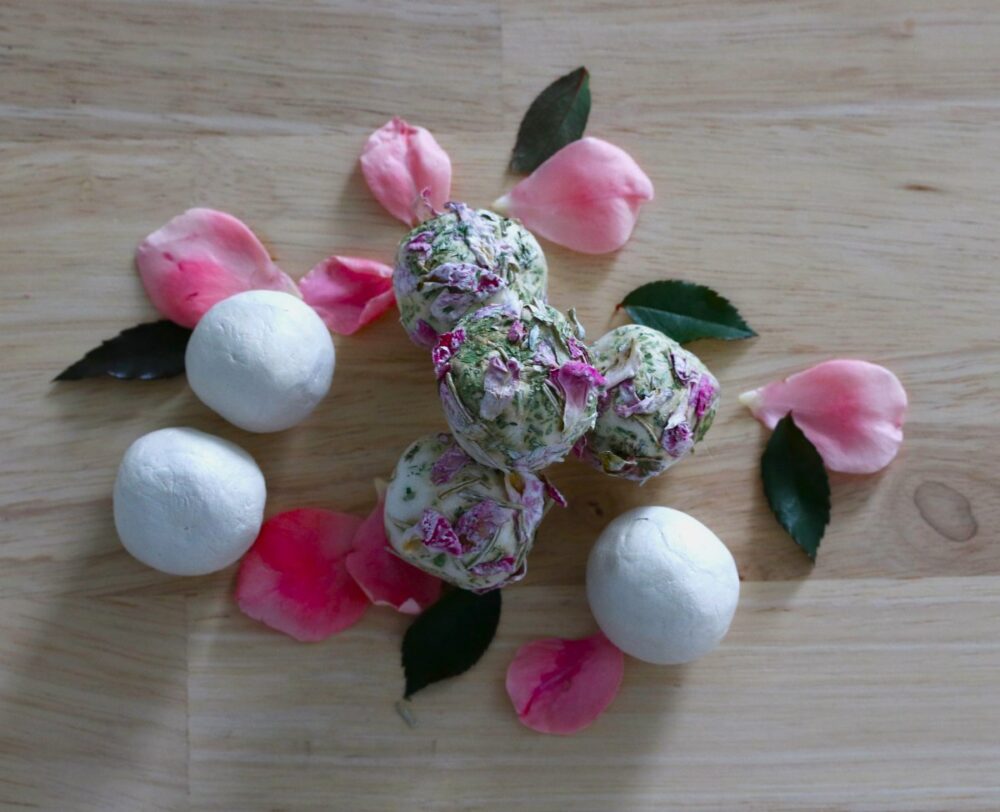
Wildflower seed bomb: a small ball made of clay, compost, and wildflower seeds used to plant native flowers that support pollinators, such as bees and butterflies. The clay shell shields seeds from birds, insects, and harsh weather. Rain softens the clay and releases the seeds into the soil.
Ancient Egyptians are credited with making the first seed bombs. Their clay balls, filled with seeds, were used to replant fields and revegetate areas along the Nile River after the annual spring floods.
Thousands of years ago, Japanese gardeners also made seed bombs to replenish the land. Referred to as Tsuchi Dango (earth dumplings), they were reintroduced in the early 20th century by Japanese farmer and philosopher Masanobu Fukuoka. Renowned for his farming techniques focused on harmony with nature, Fukuoka’s philosophy has had a lasting, inspiring impact on sustainable agriculture around the world.
NATIVE WILDFLOWER SEED BOMBS
–Seed bomb ingredients
- – Non-toxic air-dry clay
- – Organic potting soil or compost
- – Native wildflower seeds
- – Dried flower petals [optional]
Ratio: 4 parts clay to 1 part potting soil and/or compost.
–Select the wildflower seeds
Choose seeds native to your geographical area that provide habitat and/or food for pollinators. Some examples of native wildflower seeds:
- – Forget-Me-Not
- – Wild Bergamot
- – Lavender Hyssop
- – Black-Eyed Susan
- – China Aster
- – Plains Coreopsis
- – Sage
- – Lemon Balm
- – Coneflower
- – Chamomile
- – Mint
- – Lemon Basil
- – Thyme
- – Lavender
–Make the seed bombs
- – Scoop a small amount of the clay [golf ball size] into a ball.
- – Roll or press into a flat disc.
- – Add 1 tablespoon soil to the center of the disc.
- – Top soil with 5-10 seeds.
– Carefully pinch the clay, soil and seed mixture shut.
– Gently roll into a ball. - – (Optional) Re-roll seed bomb in dried petals for a decorative touch.
- – Place the balls on wax paper and allow to dry for several days.
- – Store the seed bombs in a cool, dark place until you’re ready to plant them.
–Plant the seed bombs
- – Plant in spring after danger of frost or in fall before the first frost.
- – Plant the seed bombs 1/4” to 1/2” deep and about 12”-18” apart. – During the next few weeks, water your planting area. Water and nature’s elements will break down the air-dry clay, and watch your seeds grow!
©AnneMarie Hunter 2026
